
When folks ask what I studied as an undergrad, I tell them my International Politics coursework taught me how the world worked, while Comparative Literature taught me how to think. After graduating in May 2025, I started my career in consulting, supporting projects in global health and emerging technology. The following year, I moved to DC and expanded into healthcare, emerging technology, and energy work. Entering the professional world showed me how valuable my liberal arts education truly was. The analytical skills I developed - particularly the ability to identify throughlines across projects - have proven essential in the private sector. This capacity for synthesis has made my work both effective and personally fulfilling.
I'm fortunate that my day-to-day work provides intellectual stimulation, but I recognize this is a privilege many may not have. When that intellectual engagement isn't available in one's career, personal fulfillment becomes even more important - and that, too, draws on the critical thinking and analytical frameworks my liberal arts education provided me.
I'm fortunate that my day-to-day work provides intellectual stimulation, but I recognize this is a privilege many may not have. When that intellectual engagement isn't available in one's career, personal fulfillment becomes even more important - and that, too, draws on the critical thinking and analytical frameworks my liberal arts education provided me.

Comparative Literature supported my growth to develop a greater understanding of literary analysis as well as interdisciplinary culture within a global context. Throughout my courses and internships, I’ve interacted with professors and students who had a specialized field of knowledge and the ability to connect such ideas across historical, philosophical, and national borders. Not only was the faculty supportive within my studies, the major also allowed me to apply myself to a diverse range of academic and extracurricular activities throughout my time at Penn State. From participating in student government, NGOs, and international political research, I was also exposed to a variety of learning styles that ranged from seminar to lecture-based coursework. Since graduating, I volunteer as an advocate for abused and neglected juveniles and serve as a paralegal specializing in Guardianships -- protecting individuals declared legally incompetent. I look forward to continued growth in my academic and professional path through my undergraduate experience in Comparative Literature.

I completed my Bachelor's in Supply Chain and Information Systems, and the integrated B.A./M.A. program in Comparative Literature in 2023. After that, I taught ENGL 15 at Penn State for a year. I returned to Indonesia the following year and now I'm a Ph.D. candidate in Anthropology at Monash University Indonesia and an Herb Feith Scholar.
Studying Comparative Literature at Penn State taught me that everything is connected. People usually find it amusing that I studied two completely different things as an undergraduate, but I managed to find a meeting point between the two in the form of land-related activism (my Ph.D. project right now!). Besides any explicit forms of "traditional" comparison, I find that I've led a very Comp Lit life from living between countries in my formative years and then taking all that knowledge back home. I'd like to think that I've embodied what I've learned, and that it has helped me adapt to new situations and make sense of change in my personal life.
Studying Comparative Literature at Penn State taught me that everything is connected. People usually find it amusing that I studied two completely different things as an undergraduate, but I managed to find a meeting point between the two in the form of land-related activism (my Ph.D. project right now!). Besides any explicit forms of "traditional" comparison, I find that I've led a very Comp Lit life from living between countries in my formative years and then taking all that knowledge back home. I'd like to think that I've embodied what I've learned, and that it has helped me adapt to new situations and make sense of change in my personal life.

I graduated from Penn State in 2023 and began working in the mental health field, specifically with children and adolescents experiencing the effects of early childhood trauma. I am currently working towards my Master of Social Work at the University of Maryland and working as a Crisis Specialist in Washington, D.C., responding to acute mental health crises for children and adolescents ages 6-17.
One of the greatest things about Comparative Literature is that it prepares you for synthesizing contextual information to form an outcome, an opinion, or a solution. In my case, this meant forming new pathways through which I could understand how a child's unique background, environment, social factors, culture, and experience could shape mental health and behavior. I remember, and often think back on, a translation course I took my final semester at Penn State in which we pondered the values of translation, what could be lost in translation, and how to capture the essence of what the writer intended. Translation is essential to comparative literature and bridges the gap to allow access to different ideas, cultures, and traditions. In a way, the mental health field is similar and attempts to translate a person's experiences so the social worker or counselor can understand what it is that an individual needs and how to help them. I strongly credit my experiences in Comparative Literature with the development of my style as a social worker and the emphasis I place on understanding a person's past to better prepare them for the future.
One of the greatest things about Comparative Literature is that it prepares you for synthesizing contextual information to form an outcome, an opinion, or a solution. In my case, this meant forming new pathways through which I could understand how a child's unique background, environment, social factors, culture, and experience could shape mental health and behavior. I remember, and often think back on, a translation course I took my final semester at Penn State in which we pondered the values of translation, what could be lost in translation, and how to capture the essence of what the writer intended. Translation is essential to comparative literature and bridges the gap to allow access to different ideas, cultures, and traditions. In a way, the mental health field is similar and attempts to translate a person's experiences so the social worker or counselor can understand what it is that an individual needs and how to help them. I strongly credit my experiences in Comparative Literature with the development of my style as a social worker and the emphasis I place on understanding a person's past to better prepare them for the future.

After graduating in 2022, I wasn’t sure where I fit in professionally. First, I tested the waters with two internships, one with a Corporate Social Responsibility Foundation in Philadelphia, and then another with the John Templeton Foundation, specializing in data analysis. I was nervous to try my hand at data analysis when I wasn’t formally trained, but my ability to think critically and learn quickly led me to excel in the role, eventually continuing to work part time with the foundation after my initial contract ended. Because they didn’t have headcount to hire me full-time, I decided to explore career other opportunities and began another contract role, this time in the corporate world, working as a communications professional at the software company SAP. After that contract ended, I took a leap of faith and shifted to finance, working in customer service at Vanguard. Because of my strong communication skills, I advanced quickly to an operations role and am currently working with Enterprise Communications for the Chief Data and Analytics office.
My path after graduation has been one of uncertainty and exploration. I learned that what sets me apart as a professional isn’t what I know but the way I am equipped to problem-solve, learn quickly, and innovate with creativity and an open mind. I would not be the professional I am today without the mentorship of the great minds of Penn State’s Comparative Literature department, and I am immensely grateful.
My path after graduation has been one of uncertainty and exploration. I learned that what sets me apart as a professional isn’t what I know but the way I am equipped to problem-solve, learn quickly, and innovate with creativity and an open mind. I would not be the professional I am today without the mentorship of the great minds of Penn State’s Comparative Literature department, and I am immensely grateful.

Since graduating from Penn State with dual B.A. degrees in Comparative Literature and Theatre, I have relocated to Pittsburgh, PA, to pursue graduate school at the University of Pittsburgh. In 2024, I received my M.A. in Theatre and Performance Studies from Pitt and am on track to receive my Ph.D. in the spring of 2027. My research focuses on musical theatre production in spaces in and beyond the commercial site of Broadway.
Outside of academia, I work as a dramaturg with a variety of theatrical institutions across the country ranging from Off-Broadway to community theaters to high schools. In this line of work, I strive to create a theatrical experience for both artist and audience that is grounded in creativity, ethics, and pleasure. The skills learned as a student in the Comparative Literature major at Penn State continue to inform the work I do as a scholar-practitioner who is curious about the ways in which the words of an artist can reach its audience.
Outside of academia, I work as a dramaturg with a variety of theatrical institutions across the country ranging from Off-Broadway to community theaters to high schools. In this line of work, I strive to create a theatrical experience for both artist and audience that is grounded in creativity, ethics, and pleasure. The skills learned as a student in the Comparative Literature major at Penn State continue to inform the work I do as a scholar-practitioner who is curious about the ways in which the words of an artist can reach its audience.

I discovered Comparative Literature halfway through my undergraduate experience, and choosing the major was one of the best decisions I made. The program gave me the flexibility to also complete degrees in Journalism and Spanish while staying engaged on campus, and the department’s courses and professors remain some of my fondest Penn State memories. Now, I work at Wesleyan University on the Annual Giving team while pursuing my master of arts in Liberal Studies. Comparative Literature taught me to read with a global perspective, and I continue to read and write whenever I can.
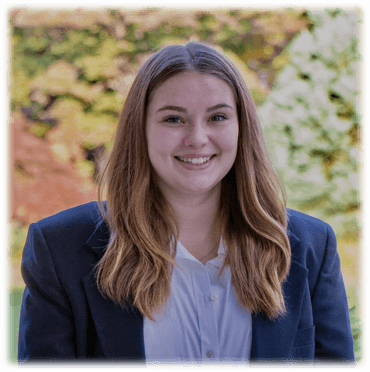
Engaging in creative and analytical discourse in the Comparative Literature program was an eye-opening and vital piece of my undergraduate education. The skills I learned here are a cornerstone of my professional and personal success. As media analyst for AKCG – Public Relations Counselors, I draw on my Comparative Literature experience every day to analyze trends in news media, evaluate reputational risks, and translate current events into actionable communications strategy. No matter where my future takes me, I know my Comparative Literature skills are universal!

After graduating from Penn State, I spent some time working in Major League Baseball for the Baltimore Orioles, where I was a bit of a Swiss Army Knife. I primarily worked in player development with our minor league athletes (teaching English and cultural education to our domestic and international players), scouted prospects in Latin and South America, tackled plenty of miscellaneous administrative tasks for the front office, etc. It was an incredibly exciting and demanding job, but the volatility of the industry during the pandemic really pushed me to shift my focus. I am an extremely extroverted guy and saw myself as someone who could easily transition into sales, which I ultimately did back in late 2020. After starting with Syneos Health, I moved to Johnson & Johnson, and eventually to UCB Pharmaceuticals where I am still at now, working closely with dermatology physicians to educate them on the biologics landscape and formulary updates. In December 2025, I received an MBA and an M.A. Health Care Administration from Oklahoma State University.
I would say the main thing that Comparative Literature provided me with that’s proven to be useful in my career thus far has been my exposure to so many different channels of thought and the cultural melting pot that I saw in my classes. Looking back, my cohort at Penn State comprised of peers from so many different gender groups, political associations, socioeconomic classes, academic pursuits, and more. It truly made me a more open-minded individual and helped me better escape my own biases while communicating with people that are different from myself and others like me. My love for music, art, literature, cinema, and sports has flourished in large part due to my time spent in Penn State’s Comparative Literature department and has driven me closer to friends, family, and colleagues over the years. I find ways to relate to almost everyone, which I humbly consider to be my superpower and greatest asset.
I would say the main thing that Comparative Literature provided me with that’s proven to be useful in my career thus far has been my exposure to so many different channels of thought and the cultural melting pot that I saw in my classes. Looking back, my cohort at Penn State comprised of peers from so many different gender groups, political associations, socioeconomic classes, academic pursuits, and more. It truly made me a more open-minded individual and helped me better escape my own biases while communicating with people that are different from myself and others like me. My love for music, art, literature, cinema, and sports has flourished in large part due to my time spent in Penn State’s Comparative Literature department and has driven me closer to friends, family, and colleagues over the years. I find ways to relate to almost everyone, which I humbly consider to be my superpower and greatest asset.

Studying Comparative Literature provided a much-needed balance to a schedule filled with business courses, offering valuable opportunities to refine my reading and writing. More importantly, these courses taught me critical thinking, communication, and logical reasoning skills—attributes that are highly valued in the financial industry yet often overlooked in traditional business education.
As my career progressed from junior roles to managing large, dynamic organizations and founding my own financial services company, I found myself relying on my liberal arts background more than ever. Now, as an executive working at the intersection of AI and professional services, I am deeply appreciative of the perspective my Comparative Literature education provides.
As my career progressed from junior roles to managing large, dynamic organizations and founding my own financial services company, I found myself relying on my liberal arts background more than ever. Now, as an executive working at the intersection of AI and professional services, I am deeply appreciative of the perspective my Comparative Literature education provides.
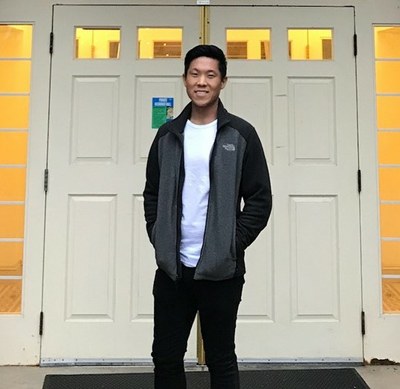
I graduated from Penn State in 2008 with three Bachelor of Arts degrees in Journalism (College of Communications), English, and Comparative Literature. After working in marketing communications for several years, I transitioned to project management at PNC in 2022.
All my majors taught me that clear, concise communication is of the utmost importance in the corporate world. Using analytical skills to translate literature into real-world experience, one doesn't need a business degree to learn the analytical skills many companies seek in employees. I couldn't completely give up my creative side, so I am also a freelance copywriter/copy editor. I started my own business doing ad hoc, contract work with non-native English speakers who work in academia to edit their papers for submission/publication to academic journals.
All my majors taught me that clear, concise communication is of the utmost importance in the corporate world. Using analytical skills to translate literature into real-world experience, one doesn't need a business degree to learn the analytical skills many companies seek in employees. I couldn't completely give up my creative side, so I am also a freelance copywriter/copy editor. I started my own business doing ad hoc, contract work with non-native English speakers who work in academia to edit their papers for submission/publication to academic journals.

I graduated in 2005 and since then there have been many instances where I feel like what I learned through Comparative Literature has been a significant asset. I currently work for the U.S. Department of Commerce as a trade specialist; our agency assists small U.S. companies develop and increase sales internationally.
I majored in Comparative Literature, with a language focus on English and Spanish. I also dabbled in French, which enabled me to move to France, gain fluency, and become an English Assistant. My language skills, along with the ability to write well, were the most important things I learned in college. They set me apart from other students, applicants, and researchers.
After my year in France, I joined Teach for America. Being multilingual helped me communicate with my students’ parents and create training pathways for multilingual educators in TFA. Experiences in Teach for America led me to apply to Georgetown Law. My strong writing skills came in handy, because as they say, “the best writers get the best grades.” In law school, I was a T.A., helped peer review papers, and, most importantly, I represented unaccompanied minors in immigration detention. I graduated in 2011 magna cum laude. Since law school, I have clerked for judges in D.C., held a fellowship at the Legal Aid Society, and represented many Spanish-speaking clients. My victories have been hard won, and taken a tremendous amount of effort, but I know that Penn State’s Department of Comparative Literature gave me the tools to be successful.
After my year in France, I joined Teach for America. Being multilingual helped me communicate with my students’ parents and create training pathways for multilingual educators in TFA. Experiences in Teach for America led me to apply to Georgetown Law. My strong writing skills came in handy, because as they say, “the best writers get the best grades.” In law school, I was a T.A., helped peer review papers, and, most importantly, I represented unaccompanied minors in immigration detention. I graduated in 2011 magna cum laude. Since law school, I have clerked for judges in D.C., held a fellowship at the Legal Aid Society, and represented many Spanish-speaking clients. My victories have been hard won, and taken a tremendous amount of effort, but I know that Penn State’s Department of Comparative Literature gave me the tools to be successful.

My love of languages, foreign cultures, and literature and my interest in a flexible major that would allow me to explore my academic interests through electives brought me to the Comparative Literature department at Penn State. It was an excellent choice. I minored in Spanish and, after enjoying several History classes, added a double major with History. After graduating in 2002, I moved to Baltimore, MD, and shortly after that to Washington, D.C. At that time, I did not have a specific career path in mind, so I looked broadly for interesting work opportunities. I started out working as a temp while networking and doing information interviews. Ultimately, an internship in the office of a Pennsylvania Congressman led to my first permanent job and over the next eight years I worked as a Legislative Aide in the House of Representatives. Along the way, I took a few breaks between jobs to travel internationally and do volunteer work. In 2012, after deciding it was time to step away from the political arena, I left Capitol Hill and took a job with the USDA Food and Nutrition Service, where I now work on regulations and policy for several domestic nutrition assistance programs.